Side A
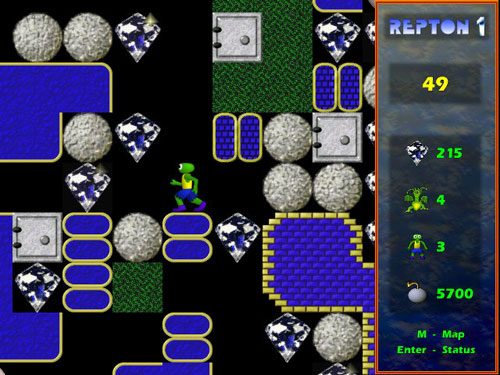
The Superior Software games in this archive are the only group in it where the publisher, the catalogue and the commercial trail all survived together. That makes them both the richest material here and a useful control against everything else.
5
Titles held
2
Machines
5
Still sold

One publisher, one continuous owner, and the Superior Software games Repton established as a series in 1986.
Almost every other title in this archive was sold by a studio that has since gone quiet. The Superior Software games are the exception, and the reason is ownership rather than quality. The name passed to Superior Interactive, which still trades and still sells conversions, so there has never been a moment when the catalogue had no custodian.
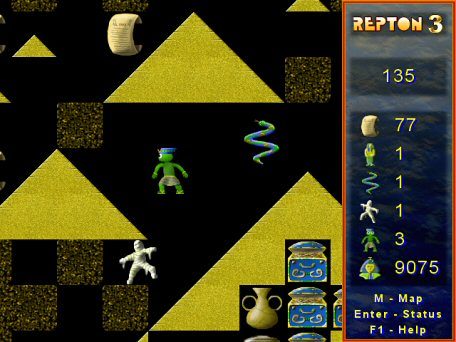
The second reason is a design decision. Repton 3 shipped its own level editor, which meant the people who bought it could keep producing content for it. Level packs moved from cassette to disc to the web without a break, and a format with an active author base is very hard to kill. The BBC Micro and the Acorn Electron both stopped being sold decades ago; the levels did not stop arriving.
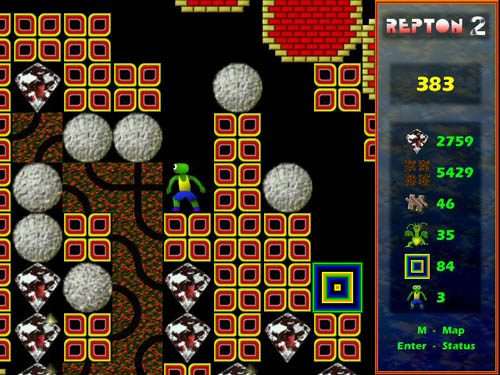
What the Repton games also demonstrate is how little a puzzle design ages when it contains no randomness. Boulders fall, earth is dug, and nothing in a level moves until the player moves — so a screen designed in 1986 presents exactly the same problem today as it did then. There is no reflex component to be flattered or punished by faster hardware.
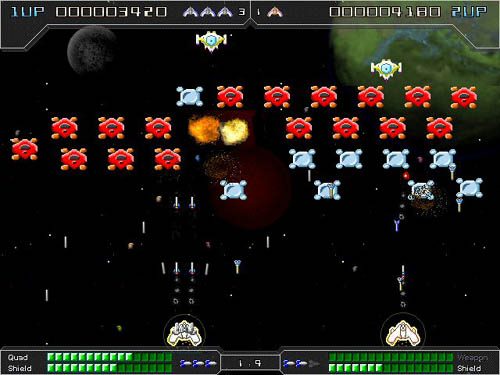
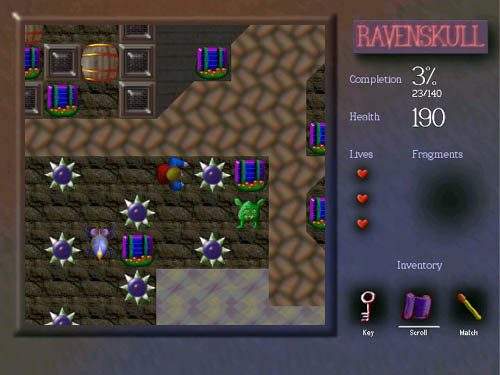
The other two threads here are narrower. Ravenskull is an arcade adventure built on one large connected map, which asks for a paper map rather than a solved screen. Galaforce is a fixed-screen shooter about learning wave patterns. Neither spawned an author community, and both are held here as complete records rather than as living formats.
The Superior Software games Repton belongs to, in order of release. Every status confirmed by direct request on 31 July 2026.
Side A
Side A
Side A
Side A
Side A
Same processor, same clock, and not the same performance.
Every title on this page was published for both the BBC Micro and the Acorn Electron, and the two do not behave alike. They share a 6502 at 2 MHz, but the Electron routes video and memory access through a single custom chip which holds the processor off the bus during the graphics modes these games use. The result is that identical logic runs slower, and in a fixed-step puzzle that reads as the timing being wrong rather than the machine being slow.
Sound is the starker difference. The BBC Micro has three tone channels and a noise channel; the Electron has one. In Galaforce, where an experienced player recognises an incoming wave partly by its sound, most of that information is simply absent on the cheaper machine.
Availability, the two machines, and what this archive is not.
5 titles: the Repton puzzle series, Ravenskull and Galaforce, all on the BBC Micro and the Acorn Electron. Each has its own entry with a dated commercial status.
Yes. Superior Interactive, the company continuing the name, answered a direct request on 31 July 2026 and lists conversions of the catalogue for sale. That continuity of ownership makes these the healthiest entries in this archive.
Because Repton 3 shipped its own level editor. Publishing the tools alongside the levels turned buyers into authors, and user-made level packs have been produced continuously ever since — so the format outlived the BBC Micro and the Acorn Electron it was written for.
Yes, and audibly as well as visibly. The Electron has one sound channel against the BBC Micro’s three, so per-wave audio cues in Galaforce are much reduced. It is also slower in the graphics modes these games use, because a single custom chip arbitrates video and memory access together.
No. This is an independent reference archive. Superior Interactive is linked from every relevant entry so a reader can go to the source, and nothing here is published on their behalf.